To make a movie, you need an army. Figuratively, of course. You need coffee runners, writers, gaffers, directors, actors, producers, script analyzers, designers, costumers, make up artists, editors… the list goes on and on. The most wonderful part of needing a group as large as this is simple: everyone makes the movie happen. Everyone.
That being said, every person also adds their own flare to the projections they are a part of. Of course, some people have more voice in the production than others. The artists of the film set, this being the directors, actors, editors, producers, writers, cinematographers…etc. all have a style they work with that changes the words from a page into a visual experience.
Writers start off the process by creating the screenplay that will catalyze the story from paper to page. Writers do this amazing thing where they create PEOPLE, PLACES, SITUATIONS, even. Writers are the first people to understand the characters as who they are, the first people to set foot in their world and the first people to experience their situations. Personally, I believe writing is the most important part of the process.
Writers form their ideas, which in turn grasps the attention of people like producers and directors. The writer already has made an impact without walking onto a film set because their words turn wheels inside heads. Their work influences where the movie takes place, who will fit the parts, what the characters look like, how they dress… All the building blocks of the film are created by the screenwriter. And, to me, that’s pretty influential.
Sometimes screenwriters are finished after they create their screenplay. They’ll sell it off, and then it belongs to the hands of the production company and director to mold it exactly how they see it. Sometimes, however, the screenwriter is a part of the process and is used as guidelines to stay true to their story. This doesn’t necessarily mean the movie is bad or good. It does, though, cause creative differences from the original work to the screen.
A famous example of this can be found in Stanley Kubrik’s The Shining. Stephen King, the author of The Shining, was not a part of the creative process. Kubrik read King’s novel, interpreted it in his own way, and then saw to it that the movie was to be done that way. Extreme differences can be seen when the book is read to watching the movie, for instance, the ending. King then went on to create a miniseries in 1997 based on the book, which rang more true to his words on the page. Two very different versions. Two very polar interpretations of the text.
Since we’re on the subject of director interpretations, directors play a huge role in shaping a film throughout. Truly from the beginning, the director is one of the most important people on the set. They’re the ones (along with producers and assistants) that formulate an idea from the script, cast the actors, hire the crew. They’re the artists choosing the other artists they wish to work with.
They also are the ones who really build the feel of the movie. Many times, directors have a particular style. Well-known directors, like Steven Spielberg, Martin Scorsese, Quentin Tarantino and Stanley Kubrik (and of course, many others) are known for the way they shoot and direct their movies.
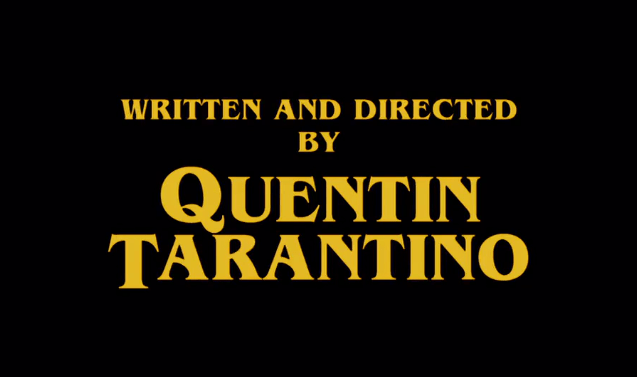
Tarantino, for example, often superimposes texts over his, breaking his into acts. He is also known for his signature font used at the beginning of the film, that states “Written and Directed by Quentin Tarantino”.
Martin Scorsese also has a particular style to his films. He often uses montages and voice overs to create a storyline. This method can be found in many of Scorsese’s movies.
These signature crafts are something people look for in a movie. The look and feel of a movie is created by directors in order to set themselves a part from other directors. If all of our movies looked the same, it would be impossible to figure out what style you like because they’d all look the same. While the words and genres may be different, it’s these interpretations that really drive home how different movies AND directors are.
You can even see this when different directors film the same movie. Often dubbed as “remakes”, they truly are just another interpretation from another director. The movies that are “remade” may follow the same story path, but the entirety of the movie will differ. Scenes may be added, or dropped. A character is a bit more timid than that of the first, or their dialogue is altered…It’s kind of like that disagreement with Kubrik and King, where one saw it a certain way and the other another way. No one person views the same thing and no one person directs the same way.
“A great director gives life to a work of art- gives it a heartbeat… a pulse… opens its eyes to the world.”
― A.D. Posey
Directors are an essential part of the movie, potentially even the center when thinking about all the things they have a hand in. And one of those things is casting. Directors go through sometimes an extensive auditioning process, screening until they find the perfect actors for their story. Actors are another huge portion of artists that help drive the process of filmmaking, and mold it, as well.
Acting is an art form without film. For many years, actors stood on stages, bellowing out lines in front of audiences. As cinema began to evolve and become a more established part of society, actors then began to transition their proselytizing to the big screens. While it may be art on it’s own, acting brings a whole other level of power to cinema.
Actors are detrimental to the artistic process of filmmaking. Without them, there would be no one to speak the words from the page. And what they do with the words is even more astounding. Actors bring around another set of eyes, and much like the director, make their own interpretation of the text.
When actors create their own interpretation of the text, it adds a layer to the production. Many times, actors meet with the directors to further discuss and break down the plot. This helps both of them, really, to potentially see the story in a different light. The collaboration of actor and director help shape a performance right from the get-go.
The most important job of an actor is to build back story. For the character, that is. Actors dive further into the subtext of writing and seek out the “whys and wants” that a character may be seeking themselves. This allows them to mold the person you see on screen, and give themself motivation to follow through with their behaviors. This makes for a believable performance, which in turn, makes the film all the more richer. If an actor does not give a believable performance, the film turns sour. People want to watch something that takes them out of the moment, instead of focusing on a person trying to play another person. It’s extremely important to good filmmaking, to hire good actors.
And not just for a good performance. When actors build great and layered characters, they make many people’s jobs easier! Say for example, the costume department is unsure of what they want character X to wear. The actor almost always knows their character so well that they have that answer themself. A director may be unsure of how the blocking in a scene should go, and often, the actor feels a pull to move a certain way, or in a certain direction. They may help get rid of unnecessary dialogue, or find a place to add something that could really benefit a scene. They do a lot more than just read their lines.
And sometimes, it’s A LOT more than reading their lines. Actors often partake in quite a bit of physicality when on a film set. Actors may dye their hair, gain or loss weight (i.e Christian Bale),

wear awful clothing, shave their heads, move to different parts of the world.. you get where I’m going with this. It’s all just adding more to the character to ensure they truly are doing their homework and figuring out the person they are becoming.
Sometimes, too, actors AREN’T acting. They thrust themselves in uncomfortable positions that create the response needed for the camera. A well known example is Steve Carrell in the 40 Year Old Virgin. On camera, they literally WAXED his chest. His screaming in the scene is real. And yeah, he’s REALLY bleeding. Michael Keaton had to run through Times Square in his UNDERWEAR. I’m sure a very humbling moment.
Where would the actors and directors be if there wasn’t a camera and someone to make creative decisions with the camera and lighting? Cinematographers are the ones who truly create the look and feel of the movie. Each cinematographers brings their own style to whatever project their working on.
Cinematographers choose cameras, film stock, lens, lighting, filters and more to bring a certain tone set by the director’s interpretation of a particular scene, as well as the film overall. Unfortunately, sometimes they have little room to be creative; this may be in a case where the director makes almost all decisions. In other cases, cinematographers are a right hand to the director, helping with camera placement and sharing their opinions on how to add a special flare to the movie.
Now that you’ve got the footage, whose next? All that film gets sent over to the editors and visual effects people during shooting, as well as at the end. This next group of vital artists make another lasting impact on the film process.
Visual effects often create things in movies that are unrealistic, such as the giant Hulk or a large talking bird. The importance of visual effects goes far behind creating these amazing figures, though. Visual effects often bring things into movies that would be far too expensive to actually make or hire. They also allow storytelling to be furthered by making a green screen look dangerous or impractical, something we couldn’t really pull off in the filming.
Visual effects also touch up the movie and help to make it complete in its feel. Filters may be added in post, touch ups to characters (such as de-aging in The Irishman), sometimes buildings are added to create a city, or more cars are added to the street. Visual effects often is the backbone to realism, while being many based on fantasy.
Often times, visual effects and editing are going on at similar times. Editors play a major role in the artistic sensibility of a film in post-production (and during filming). Editors have the ability to string together hours and hours of footage, breaking it down into the two-hour masterpiece we finally get to see in the theaters.
An editor receives a bunch of film and has to make a story from it. Which, I’d say, is quite important to the film considering that’s what it’s all about. Editors often make decisions about what the best shots were, as well as how the shots can be a flow within the piece itself. Cutting techniques are used to do just this, which in turn also gives a sense of style to the film. For example, in Star Wars, they often wipe when going to the next scene. We don’t see this in many movies, and so often times, the technique to recalled to the famous series.
Editors also have the power to make or break a character. Sometimes, editors have more freedom from the script and can add certain parts to the movie to give layers to the characters. This may happen when editors use footage of unscripted material, or footage that was not intended to be in the film. While mainly they stick to the script, they sometimes can change it up a little bit.
Without producers, no one I just mentioned would be a part of the process. Producers are the money in filmmaking. They are the ones who back a process, and most times are a large part in the decision making. Producers help directors choose scripts, cast the roles and coordinating many of the jobs that occur on set. They work with the finances to make sure that the movie happens.
They also are one of the last eyes to see the film before final cuts are made. Most movies are actually a “producer’s cut”, meaning that the producer views the editor’s original cut or edit of the movie, then the director’s cut (one where the director makes tweaks or adds) and determines whether or not there need to be changes prior to release. That’s a pretty hefty role in a film. To be the final say of the movie. But when you’re financing a project from start to finish, I think you have that right.
A great example of producer’s cuts can be seen in the movie, Aloha. The producer saw many of the clips and decided that the director and cast must go back to the drawing board. Unfortunately, Bradley Cooper, who played the main character Brian Gilcrest, had gained weight for another movie. They mainly had to rewrite his parts and reshoot, which led to a fiasco of sorts. So basically, when they thought they had it (them being directors and editors), they didn’t have it- at all.
A producer not only sees the movie through the end of production, but they then take the movie and figure out the best way to market it. This is a huge step in the artistic process because they’re the ones who target the audiences. Producers figure out the most tasteful way to get the media to viewers and draw them in to the theaters. Without the audience, the movie wouldn’t be the same. And it also wouldn’t make any money.
Of course, there are so many other hands and eyes of a movie that I didn’t mention. From lighting crew to sound editors to the guy that grabs Spielberg’s morning coffee, each person plays an important and selective part on the set. The crew of a movie is humongous, and for good reason. The need for perspectives on a movie is endless.
Without a compilation of perspectives, a movie would not be nearly as layered. I think movies would be less interesting, honestly. There is such a necessity for collaboration in this art form. Collaboration and artistic sensibility is the key to making the movie what it is. And while the roles may all seem disconnected, they actually all just one machine. Many artforms are central to an individual, such as painting or ceramics. But this one utilizes so many different individuals to create a whole, which I think is pretty neat.
Not only that, but the way each position shapes another is interesting to me. It’s symbiotic, almost. Each position seems to influence another to create. Sometimes, of course, it hinders creativity. But that’s still an influence on the art of the film. And without it, the film would not be the same. Film is so beautiful in the way that it can bring so many artists together for one project. And how so many eyes see the same thing, and take a different perspective from it. It all starts from that screenplay. No one reads it the exact same way. And no one sees a movie the exact same way. Which leads to artistic conversations on the artists who created an artistic piece with so many hands in it.
 Emily's Film Blog