Featured

What roles do individual film artists play in shaping films throughout the production process?

To make a movie, you need an army. Figuratively, of course. You need coffee runners, writers, gaffers, directors, actors, producers, script analyzers, designers, costumers, make up artists, editors… the list goes on and on. The most wonderful part of needing a group as large as this is simple: everyone makes the movie happen. Everyone.

That being said, every person also adds their own flare to the projections they are a part of. Of course, some people have more voice in the production than others. The artists of the film set, this being the directors, actors, editors, producers, writers, cinematographers…etc. all have a style they work with that changes the words from a page into a visual experience.

Writers start off the process by creating the screenplay that will catalyze the story from paper to page. Writers do this amazing thing where they create PEOPLE, PLACES, SITUATIONS, even. Writers are the first people to understand the characters as who they are, the first people to set foot in their world and the first people to experience their situations. Personally, I believe writing is the most important part of the process.

Writers form their ideas, which in turn grasps the attention of people like producers and directors. The writer already has made an impact without walking onto a film set because their words turn wheels inside heads. Their work influences where the movie takes place, who will fit the parts, what the characters look like, how they dress… All the building blocks of the film are created by the screenwriter. And, to me, that’s pretty influential.

Sometimes screenwriters are finished after they create their screenplay. They’ll sell it off, and then it belongs to the hands of the production company and director to mold it exactly how they see it. Sometimes, however, the screenwriter is a part of the process and is used as guidelines to stay true to their story. This doesn’t necessarily mean the movie is bad or good. It does, though, cause creative differences from the original work to the screen.

A famous example of this can be found in Stanley Kubrik’s The Shining. Stephen King, the author of The Shining, was not a part of the creative process. Kubrik read King’s novel, interpreted it in his own way, and then saw to it that the movie was to be done that way. Extreme differences can be seen when the book is read to watching the movie, for instance, the ending. King then went on to create a miniseries in 1997 based on the book, which rang more true to his words on the page. Two very different versions. Two very polar interpretations of the text.

Since we’re on the subject of director interpretations, directors play a huge role in shaping a film throughout. Truly from the beginning, the director is one of the most important people on the set. They’re the ones (along with producers and assistants) that formulate an idea from the script, cast the actors, hire the crew. They’re the artists choosing the other artists they wish to work with.

They also are the ones who really build the feel of the movie. Many times, directors have a particular style. Well-known directors, like Steven Spielberg, Martin Scorsese, Quentin Tarantino and Stanley Kubrik (and of course, many others) are known for the way they shoot and direct their movies.

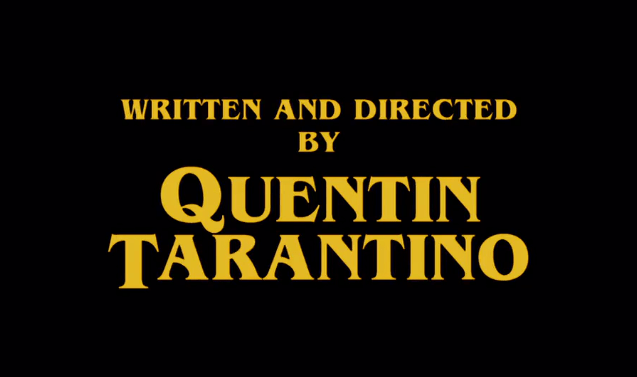
Tarantino, for example, often superimposes texts over his, breaking his into acts. He is also known for his signature font used at the beginning of the film, that states “Written and Directed by Quentin Tarantino”.
Martin Scorsese also has a particular style to his films. He often uses montages and voice overs to create a storyline. This method can be found in many of Scorsese’s movies.

These signature crafts are something people look for in a movie. The look and feel of a movie is created by directors in order to set themselves a part from other directors. If all of our movies looked the same, it would be impossible to figure out what style you like because they’d all look the same. While the words and genres may be different, it’s these interpretations that really drive home how different movies AND directors are.

You can even see this when different directors film the same movie. Often dubbed as “remakes”, they truly are just another interpretation from another director. The movies that are “remade” may follow the same story path, but the entirety of the movie will differ. Scenes may be added, or dropped. A character is a bit more timid than that of the first, or their dialogue is altered…It’s kind of like that disagreement with Kubrik and King, where one saw it a certain way and the other another way. No one person views the same thing and no one person directs the same way.

“A great director gives life to a work of art- gives it a heartbeat… a pulse… opens its eyes to the world.”

― A.D. Posey

Directors are an essential part of the movie, potentially even the center when thinking about all the things they have a hand in. And one of those things is casting. Directors go through sometimes an extensive auditioning process, screening until they find the perfect actors for their story. Actors are another huge portion of artists that help drive the process of filmmaking, and mold it, as well.

Acting is an art form without film. For many years, actors stood on stages, bellowing out lines in front of audiences. As cinema began to evolve and become a more established part of society, actors then began to transition their proselytizing to the big screens. While it may be art on it’s own, acting brings a whole other level of power to cinema.

Actors are detrimental to the artistic process of filmmaking. Without them, there would be no one to speak the words from the page. And what they do with the words is even more astounding. Actors bring around another set of eyes, and much like the director, make their own interpretation of the text.

When actors create their own interpretation of the text, it adds a layer to the production. Many times, actors meet with the directors to further discuss and break down the plot. This helps both of them, really, to potentially see the story in a different light. The collaboration of actor and director help shape a performance right from the get-go.

The most important job of an actor is to build back story. For the character, that is. Actors dive further into the subtext of writing and seek out the “whys and wants” that a character may be seeking themselves. This allows them to mold the person you see on screen, and give themself motivation to follow through with their behaviors. This makes for a believable performance, which in turn, makes the film all the more richer. If an actor does not give a believable performance, the film turns sour. People want to watch something that takes them out of the moment, instead of focusing on a person trying to play another person. It’s extremely important to good filmmaking, to hire good actors.

And not just for a good performance. When actors build great and layered characters, they make many people’s jobs easier! Say for example, the costume department is unsure of what they want character X to wear. The actor almost always knows their character so well that they have that answer themself. A director may be unsure of how the blocking in a scene should go, and often, the actor feels a pull to move a certain way, or in a certain direction. They may help get rid of unnecessary dialogue, or find a place to add something that could really benefit a scene. They do a lot more than just read their lines.

And sometimes, it’s A LOT more than reading their lines. Actors often partake in quite a bit of physicality when on a film set. Actors may dye their hair, gain or loss weight (i.e Christian Bale),

All the same dude… I know.

wear awful clothing, shave their heads, move to different parts of the world.. you get where I’m going with this. It’s all just adding more to the character to ensure they truly are doing their homework and figuring out the person they are becoming.

Sometimes, too, actors AREN’T acting. They thrust themselves in uncomfortable positions that create the response needed for the camera. A well known example is Steve Carrell in the 40 Year Old Virgin. On camera, they literally WAXED his chest. His screaming in the scene is real. And yeah, he’s REALLY bleeding. Michael Keaton had to run through Times Square in his UNDERWEAR. I’m sure a very humbling moment.

Where would the actors and directors be if there wasn’t a camera and someone to make creative decisions with the camera and lighting? Cinematographers are the ones who truly create the look and feel of the movie. Each cinematographers brings their own style to whatever project their working on.

Cinematographers choose cameras, film stock, lens, lighting, filters and more to bring a certain tone set by the director’s interpretation of a particular scene, as well as the film overall. Unfortunately, sometimes they have little room to be creative; this may be in a case where the director makes almost all decisions. In other cases, cinematographers are a right hand to the director, helping with camera placement and sharing their opinions on how to add a special flare to the movie.

Now that you’ve got the footage, whose next? All that film gets sent over to the editors and visual effects people during shooting, as well as at the end. This next group of vital artists make another lasting impact on the film process.

Visual effects often create things in movies that are unrealistic, such as the giant Hulk or a large talking bird. The importance of visual effects goes far behind creating these amazing figures, though. Visual effects often bring things into movies that would be far too expensive to actually make or hire. They also allow storytelling to be furthered by making a green screen look dangerous or impractical, something we couldn’t really pull off in the filming.

Visual effects also touch up the movie and help to make it complete in its feel. Filters may be added in post, touch ups to characters (such as de-aging in The Irishman), sometimes buildings are added to create a city, or more cars are added to the street. Visual effects often is the backbone to realism, while being many based on fantasy.

Often times, visual effects and editing are going on at similar times. Editors play a major role in the artistic sensibility of a film in post-production (and during filming). Editors have the ability to string together hours and hours of footage, breaking it down into the two-hour masterpiece we finally get to see in the theaters.

An editor receives a bunch of film and has to make a story from it. Which, I’d say, is quite important to the film considering that’s what it’s all about. Editors often make decisions about what the best shots were, as well as how the shots can be a flow within the piece itself. Cutting techniques are used to do just this, which in turn also gives a sense of style to the film. For example, in Star Wars, they often wipe when going to the next scene. We don’t see this in many movies, and so often times, the technique to recalled to the famous series.

Lots of wipes. Lots.

Editors also have the power to make or break a character. Sometimes, editors have more freedom from the script and can add certain parts to the movie to give layers to the characters. This may happen when editors use footage of unscripted material, or footage that was not intended to be in the film. While mainly they stick to the script, they sometimes can change it up a little bit.

Without producers, no one I just mentioned would be a part of the process. Producers are the money in filmmaking. They are the ones who back a process, and most times are a large part in the decision making. Producers help directors choose scripts, cast the roles and coordinating many of the jobs that occur on set. They work with the finances to make sure that the movie happens.

They also are one of the last eyes to see the film before final cuts are made. Most movies are actually a “producer’s cut”, meaning that the producer views the editor’s original cut or edit of the movie, then the director’s cut (one where the director makes tweaks or adds) and determines whether or not there need to be changes prior to release. That’s a pretty hefty role in a film. To be the final say of the movie. But when you’re financing a project from start to finish, I think you have that right.

A great example of producer’s cuts can be seen in the movie, Aloha. The producer saw many of the clips and decided that the director and cast must go back to the drawing board. Unfortunately, Bradley Cooper, who played the main character Brian Gilcrest, had gained weight for another movie. They mainly had to rewrite his parts and reshoot, which led to a fiasco of sorts. So basically, when they thought they had it (them being directors and editors), they didn’t have it- at all.

A producer not only sees the movie through the end of production, but they then take the movie and figure out the best way to market it. This is a huge step in the artistic process because they’re the ones who target the audiences. Producers figure out the most tasteful way to get the media to viewers and draw them in to the theaters. Without the audience, the movie wouldn’t be the same. And it also wouldn’t make any money.

Of course, there are so many other hands and eyes of a movie that I didn’t mention. From lighting crew to sound editors to the guy that grabs Spielberg’s morning coffee, each person plays an important and selective part on the set. The crew of a movie is humongous, and for good reason. The need for perspectives on a movie is endless.

Without a compilation of perspectives, a movie would not be nearly as layered. I think movies would be less interesting, honestly. There is such a necessity for collaboration in this art form. Collaboration and artistic sensibility is the key to making the movie what it is. And while the roles may all seem disconnected, they actually all just one machine. Many artforms are central to an individual, such as painting or ceramics. But this one utilizes so many different individuals to create a whole, which I think is pretty neat.

Not only that, but the way each position shapes another is interesting to me. It’s symbiotic, almost. Each position seems to influence another to create. Sometimes, of course, it hinders creativity. But that’s still an influence on the art of the film. And without it, the film would not be the same. Film is so beautiful in the way that it can bring so many artists together for one project. And how so many eyes see the same thing, and take a different perspective from it. It all starts from that screenplay. No one reads it the exact same way. And no one sees a movie the exact same way. Which leads to artistic conversations on the artists who created an artistic piece with so many hands in it.
How Have Women in the Film Industry Been Neglected?

Blog Post Three

“There is nothing connected with the staging of a motion picture that a woman cannot do as easily as a man, and there is no reason why she cannot completely master every technicality of the art.”

– Alice Blanche

For decades, women in film have been slighted by the industry. Lower paychecks, less opportunity, and persistent sexual abuse are only some of the hardship females have faced. Men have ruled the industry and left women to fend for themselves, often without a helping hand. While women have fought hard to create a livelihood out of the artform, they are still up against significant struggles in the male-dominated world of Hollywood.

Let’s go back to the Silent Era. A time when filmmaking was just starting out, and Hollywood was still developing into the megastar it is today. The industry was budding, and many people traveled to California to make a living. And most of those people happened to be women. Women held roles in producing, directing, writing and of course acting. The credits, however, showed little to no recognition for those women in behind-the-scenes roles. Often, a woman’s name would be replaced by a man’s or left completely out of the credits. In the case of Nell Shipman, a famous female director, producer and actress, her credentials were hidden from the Hollywood spotlight until nearly the mid-2000’s. It took 80 years to receive credit for the films she worked hard to create; many of those being destroyed in the years to come. And she wasn’t the only one. Tons of films are lost from the Silent Era, due to carelessness and disregard for the work of the filmmakers. There, plenty of other women’s names were buried.

It wasn’t only the director and producer roles that were filled by women. Makeup artists, set designers, and even animators were female-held positions. While this may seem triumphant, working in 1930 to 1950 was a higher average than it has been in decades. Most of the animators for the Ink and Pen Department, Disney’s painstaking drawing to plastic workshop were women. Women of this time helped create the iconic movies like Cinderella and Bambi. Now, only 25% of professional animators are women.

As the 1950’s began, women were seen less and less behind-the-scenes due to the pressure of society. In the fifties, a woman’s place was to be in the home. The inconsistency of the film industry, as well as the long, tiring hours seemed unsuitable for a female. In the Story of Film documentary, Cousins talks about the rise of wall street, as well as the heightened respect for the film industry. This brought the demise of female representation in film. Men, as big they took up a big part of Wall Street, soon found themselves taking over the film industry. Women began to slip into the shadows, barely surfaces in any roles other than acting. Actresses started to see more roles for romance and less stories of brave, strong-headed women that we saw in the 1930’s. The sexism of Wall Street combined with the sexism of society at the time did not allow for women to cover much ground when it came to filmmaking.

Some of the films we have watched in class really showed the divide in female and male representation in cinema, especially earlier on. For instance, one of the first movies we watched, Red Dust, had quite a bit of sexism (and racism, as well). The female lead, Vantine (played by Jean Harlow) had her head dunked into a bucket of water over and over again when refusing to follow orders from Dennis (Clark Gable). When I watched that, I couldn’t help but gasp! Why was this allowed on screen, in a seemingly normal everyday interaction?!

The combination of the Hollywood Studio System, Wall Street and societal norms pushed women out of filmmaking roles for years. As the late 1960’s and 70’s began to roll around, feminism and youth began to take over the country. While women did see a spike in some roles of independent film work, they were still silenced due to male-influence. In an industry “where you are only as good as your last film” many women had a hard time breaking through due to the fact that they were not given opportunity to showcase their talents; thus, keeping them from getting job after job. And not only were they neglected in the decision-making positions, but they were neglected on-screen as well. The sexual revolution of the 60’s and 70’s donned screens with naked women and a new rating system, which gave way for more inappropriate images. Films like Easy Rider (1969) shows ideas of rape and humiliation of women. Misogyny rang over the films of the decades with themes of sexualization, alienation and violence due to the response from the youths of the times. Too often were these themes targeted at the women in the films. Around this time is also when names like Scorsese, Coppola, Spielberg and Lucas began to pop up, only adding fuel to the male-centric universe of Hollywood. With the rise of these names, Hollywood had proof to show for the alternations they had made to the system, and the economic bustle to sustain it. While women were not “silent” in the 1960’s and 70’s film era, they were often oppressed due to the lack of funding they received. However, actresses were given some gain within the times. As the film industry began to boom with blockbuster hits, so did the paychecks for actors, especially known stars. These larger pay cuts, though significantly smaller than the males, allowed actresses like Barbara Streisand to start her own production company.

As the 80’s and 90’s began, women were thrust under the pressure of what was deemed The Hollywood Blockbuster Era. The rise of the movie Jaws put holt on many of the independent filmmakers, as more of Hollywood became studio focused. This hinder the ability for women to make strides, as many were invested in the independent area of film. Some women, however, rose to the top, one being Sherry Lansing. This phenomenal female landed the studio president of 20th Century Fox in 1980. Lansing created more opportunity for women, thankfully, producing films with female protagonists and films geared towards female audiences for what seemed like the first time since 1940. Still, the divide was great between men and women. In order to succeed at festivals, feminist organizations planned film festivals solely for women. The first female film magazine was put in place, deemed “Women & Film” along with Women Make Movies, a training aimed for women to learn and develop their skills. While the strides in the 80’s and 90’s broke way for women in film, it was also concerning that women had to be separated from men. The female driven festivals and production companies did allow for more opportunities, but it also segregated women. It was almost as if women were the only ones supporting other women, instead of a union between male and female.  

As the end of the 90’s hit, a huge blockbuster emerged; Titanic. This being primarily a female-driven audience, was thought to pave the way for more female-related content. Unfortunately, this was not met with the excitement expected and left women still craving more relatable stories. Not only that, but the blockbuster was male-run, creating another issue for female filmmakers trying to cover ground. By the mid 2000’s, the film industry had seen a track record of male-dominated and successful films. With the decline in trips to the theater, Hollywood was desperate for content that would draw in viewers. This created what is known as the “certainty effect”. The “certainty effect” established securing production, distribution, and the necessary finances for a large and expensive project is accomplished much easier than producing a smaller project with lesser or unknown individuals. As I stated before, Hollywood is very much a “you’re only as good as your last film” industry. The certainty effect helped hinder women’s impact on films due to the minimization of movies to be released.

We kind of touched on this in class, but the certainty effect also shut women out of the independent film realm in some sense. Since females weren’t getting big pictures deals and “selling out” to receive funds for more projects they were interested in, making movies in the independent world was much harder for them. When we watched Sex, Lies and Videotape (1989), we talked a little bit about Steven Soderbergh having the ability to work on both big pictures, and more niche-crafty films like Sex, Lies and Videotape. While I’m not saying he is untalented and simply is allowed this flux between the two realms because of his gender, it seems that at the time, gender might have made his transitions a little bit easier.

As the certainty effect took over, the 2000’s were still hard times for women and have continued into the present times. In 2013, it was found that females only represented 16% of the directors, producers, editors and cinematographers on big-budget or blockbuster films. Some of these included Mamma Mia! and Bridesmaids. Movies centered around females weren’t even fully represented behind the scenes.  The male control behind Bridesmaids (some producers being Judd Apatow, Barry Mendel and Clayton Townscend) allowed for the movie to break through in the industry. Because of the male influence on set, it seemed more likely that other producers would funnel money into the projects. In 2019, researchers looked at the representation of female names in the credits of the top 100, 250, and 500 films of the year. The research was broken down then further into sections based on positions held. It was found that on average, females were 20% of a film set overall (not including actresses). A steady increase from the 1980’s which was at a low of 5%, but still not even close to 50%.

Not only are roles of women on set less supported, but so are the projects themselves. Meryl Streep when asked about Mamma Mia! said that “[the film] didn’t have the Batman budget, or the Superman budget, or any man budget”. This, unfortunately, is a norm for the cycle of Hollywood that falls into a “catch-22” financing issue. Since women are not given opportunities to showcase their talents, they have little chance to succeed. When money is given to women, they are pressured far more to make steam in the box office. If they don’t “rise to the occasion” they receive more blame for the failure.

The part I’d like to touch on from this VERY important TED Talk is the idea of women being unable to “open a film”. Stacy Smith talks about how directors are often thought of immediately to be male, due to the traits associated with leadership. This then flows into the idea that women aren’t big “box office” sales due to the content they may create if in that position of leadership. I think this fits nicely with my touch on how if a film fails and a woman is in a higher crew position, it is thought of to be the reason for the “failure”. If interested, fast forward to around 8 minutes. She touches on this idea, as well as the lack of funding in female projects.

Let’s also touch on the lack of recognition women receive once they have made it into the positions they have to fight so hard to be in. The Oscars are one of the most well-known award ceremonies for filmmakers. To receive an Oscar is often a pivotal turn in a filmmaker’s career. However, most of these golden statues have been received by men. At this year’s award ceremony nearly 116 talented individuals were nominated, yet it was recorded that only 31% of the nominations were women. That is 36 women nominated out of 116. While this number has been the highest in all of Oscar history, it still isn’t enough.

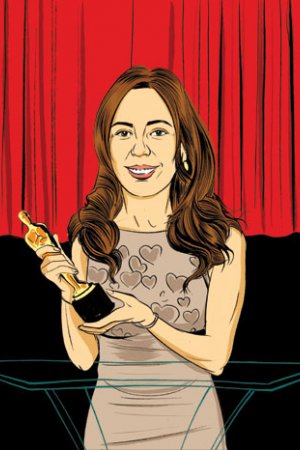
Since 1929, there have been nearly 449 nominations in the best director category. 5 of these nominations over an 87-year span went to women. It wasn’t until 2008 that a woman won the best director category. This Oscar win was HUGE for women in filmmaking, but it didn’t make enough of an impact. Since Katherine Bigelow’s win for The Hurt Locker in 2008, no woman has been nominated for best director since. The pattern continues on and it doesn’t seem to change. This year, no females were recognized in the directing category to follow the trends of previous years. Not to mention that almost all of the movies nominated were centered around men.

If there’s specific resistance to women making movies, I just choose to ignore that as an obstacle for two reasons: I can’t change my gender, and I refuse to stop making movies.

– Katherine Bigelow

Women aren’t only being denied the ability to showcase their directing talents, but this neglect seeps into the roles and characters of the people within the films of this era. Researcher Martha Lauzen did a study involving the women featured on the big screen. The study was based on 2,300 characters in the top 100 films of 2019. Based on the evidence, Lauzen drew a conclusion that only 37% of females had speaking roles in films. Moviegoers were almost twice as likely to observe a male speaking character on the screen than a female. It doesn’t stop there, either. When women were present in a director or producer role, 58% of the protagonist roles went to females, while when males dominated behind-the-scenes roles, female only took up about 30% of those lead roles. In a 2020 Vanity Fair article, Laura Bradley puts it perfectly, saying “in films without women writing and/or directing, women simply received fewer of the important parts”.

Actresses in these important parts still feel the blows from the industry in similar ways. Actresses are often neglected or turned away because of the lack of storylines that Hollywood has provided for them. More often than not, women are forced into roles based on romance or secondhand to the male protagonist. While Hollywood has made strides to incorporate more female stories, it still has a long way to go. The main opportunities women have for protagonist roles are held in the independent film area; which doesn’t differ much from what we saw in the 1970’s-90’s. If we are only allowing females to take charge and showcase their talents in one area, how do we expect them to succeed?

We can’t expect them to succeed when they are constantly being belittled next to their male co-stars, either. Traditionally, actors have made more than actresses. Emma Stone was quoted saying that “actresses only make 78% of what their male counterparts make. [And] women are far more likely to be fired than men”.  In 2018, it was found that the world’s highest paid actresses [from 2016-2017] made a combined $172.5 million. The world’s highest paid actors [from 2016-2017] earned more than double that amount: $488.5 million. An outstanding and disheartening difference in pay. Another example can be seen in an issue with Michelle Williams on the set of All the Money in the World. Production was required to reshoot scenes with both Mark Wahlberg and William due to the Kevin Spacey drama. When reshooting scenes, Wahlberg negotiated to be compensated $1.5 million for the reshoots, while Williams received $80 per diem. At the end, Williams received $1,000, less than 1 percent of what Wahlberg made. The most horrendous part? They were represented by the same talent agency.  The firing and paychecks are most often due to the “boxes” women are placed in on sets. Categories such as “difficult” or “hard to work with” are only two of the ever-growing list. It seems as though women can’t ask questions or negotiate on a set without being sent off with a label. While this isn’t true for all situations, it seems like a reoccurring issue too often. And too often are women being compromised for their gender.

A groundbreaking issue that is starting to be taken more seriously is the issue of sexual harassment and assault in Hollywood. Recently, the #MeToo movement has made grounds, bringing to surface many of the issues of assault that have happened within the business. As if the females didn’t have to defend themselves enough in their positions, the constant fear of being taken advantage of it without a doubt their strongest fight. A study done in 2018 shows that nearly 81% of women in the film industry have been or are being sexually harassed. The study did the number on men as well and found that 34% of males had received verbal assault, while 17% of men reported being groped or touched inappropriately. While both experiences matter, it is clear that women in the film industry have to fight harder for safer work environments. The unfortunate reality of the situation, though, is that many times when women or men do speak up, their voices are not heard. The film industry is working harder to alleviate this issue, but it still often happens that people lose their jobs when they speak up. This hugely important issue makes it much more difficult for people of all genders to get help, but more likely are the women seeing this battle. If they cannot speak up without losing their jobs, how can we ever bring an end to these awful circumstances?  

For nearly one hundred years, women have been fighting to make their mark in the film industry. The injustices that have been placed upon them due to their gender is insurmountable. The disparities of lower paychecks, sexual assault and less representation both on an off camera should be tolerated no longer. This timeless issue will be present until we give women more reign in decision-making roles within the industry. It is time for change.

Introduce Yourself (Example Post)

This is an example post, originally published as part of Blogging University. Enroll in one of our ten programs, and start your blog right.

You’re going to publish a post today. Don’t worry about how your blog looks. Don’t worry if you haven’t given it a name yet, or you’re feeling overwhelmed. Just click the “New Post” button, and tell us why you’re here.

Why do this?

  • Because it gives new readers context. What are you about? Why should they read your blog?
  • Because it will help you focus you own ideas about your blog and what you’d like to do with it.

The post can be short or long, a personal intro to your life or a bloggy mission statement, a manifesto for the future or a simple outline of your the types of things you hope to publish.

To help you get started, here are a few questions:

  • Why are you blogging publicly, rather than keeping a personal journal?
  • What topics do you think you’ll write about?
  • Who would you love to connect with via your blog?
  • If you blog successfully throughout the next year, what would you hope to have accomplished?

You’re not locked into any of this; one of the wonderful things about blogs is how they constantly evolve as we learn, grow, and interact with one another — but it’s good to know where and why you started, and articulating your goals may just give you a few other post ideas.

Can’t think how to get started? Just write the first thing that pops into your head. Anne Lamott, author of a book on writing we love, says that you need to give yourself permission to write a “crappy first draft”. Anne makes a great point — just start writing, and worry about editing it later.

When you’re ready to publish, give your post three to five tags that describe your blog’s focus — writing, photography, fiction, parenting, food, cars, movies, sports, whatever. These tags will help others who care about your topics find you in the Reader. Make sure one of the tags is “zerotohero,” so other new bloggers can find you, too.

Create your own website, free on WordPress.com.Create your own website.
Start free